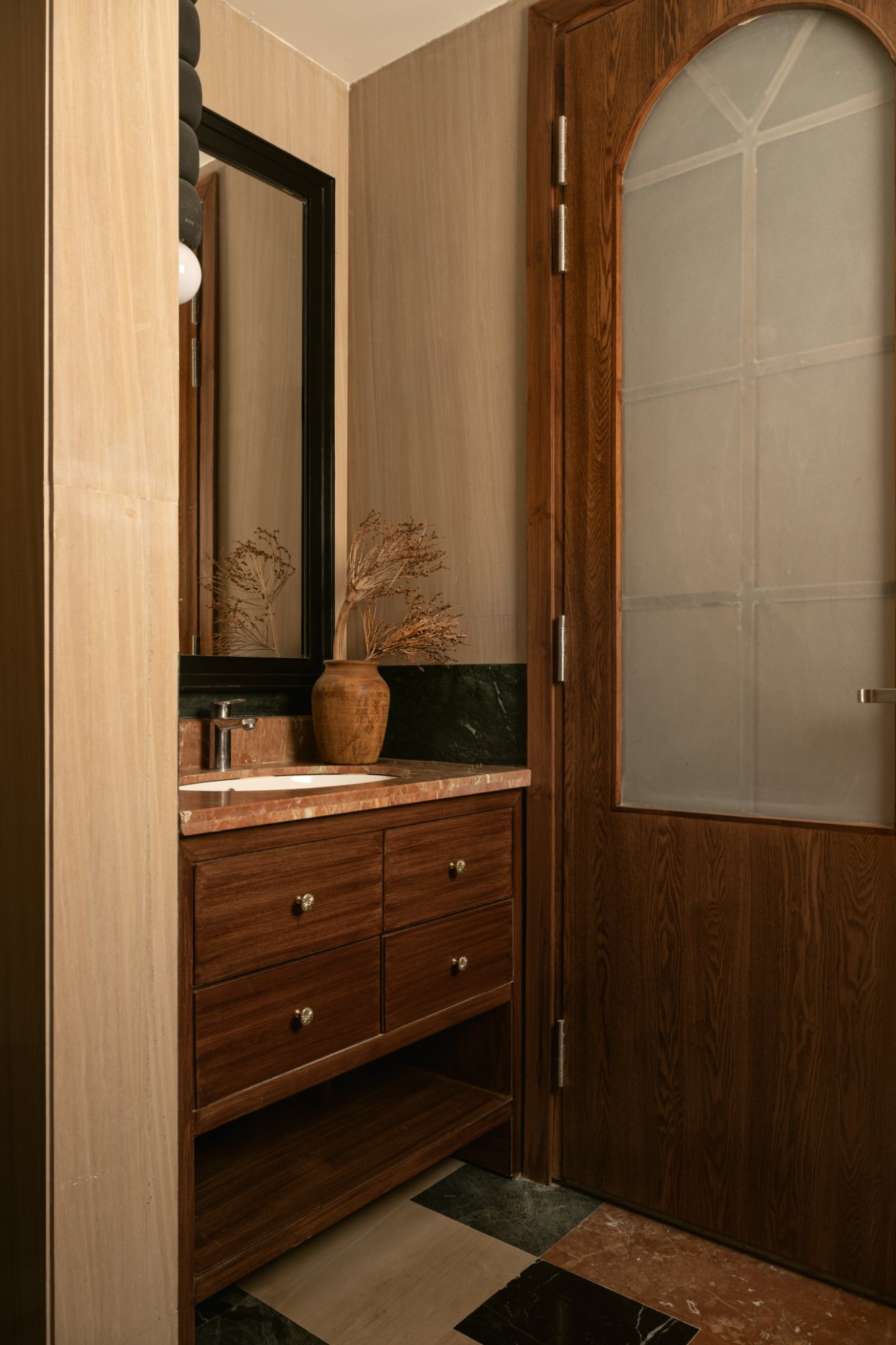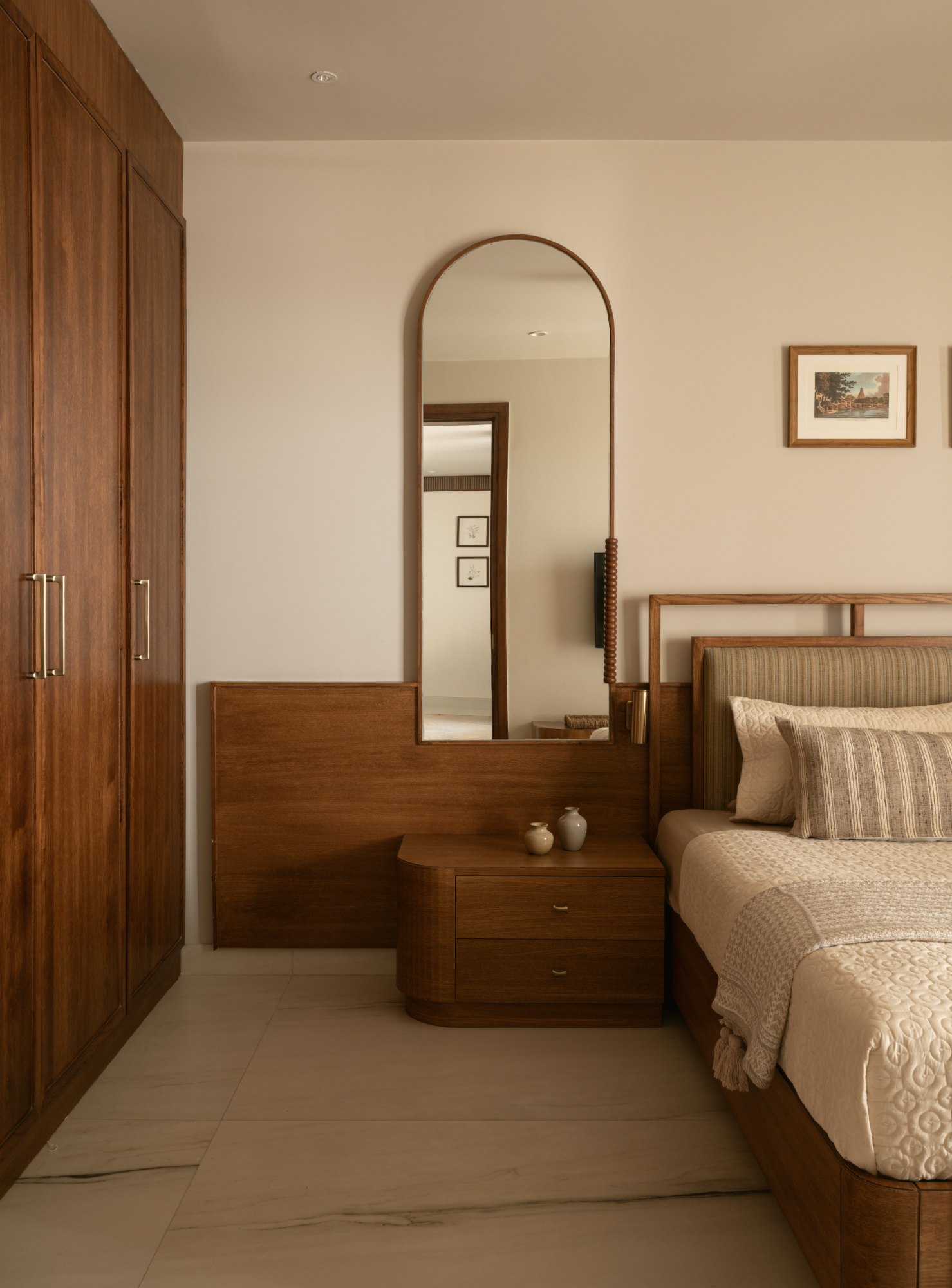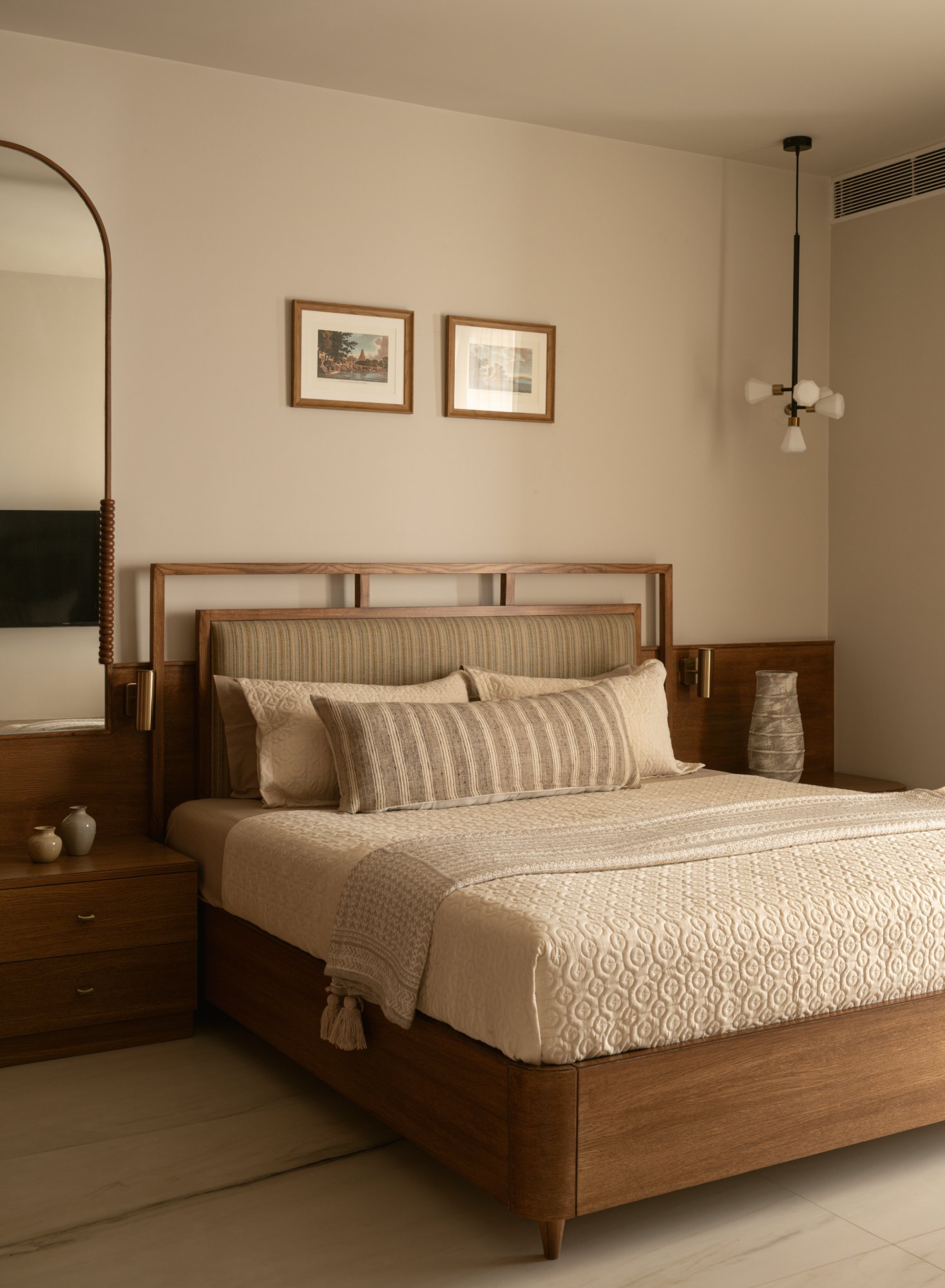
A 3,000 square foot, four-bedroom apartment where Indian craft is treated as the architecture rather than the accessory — brick, brass, teak and handmade colour, held together by warm restraint.
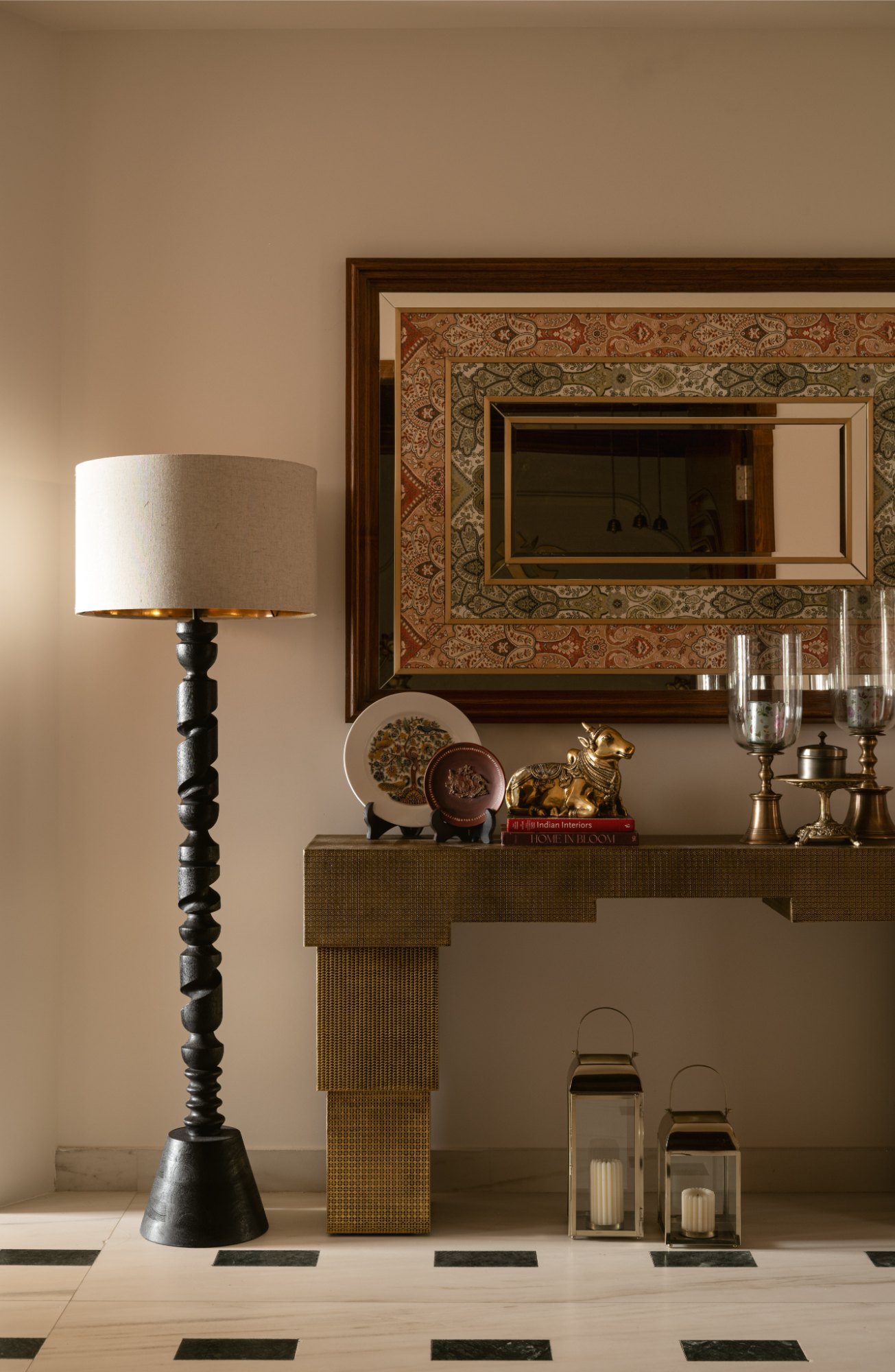
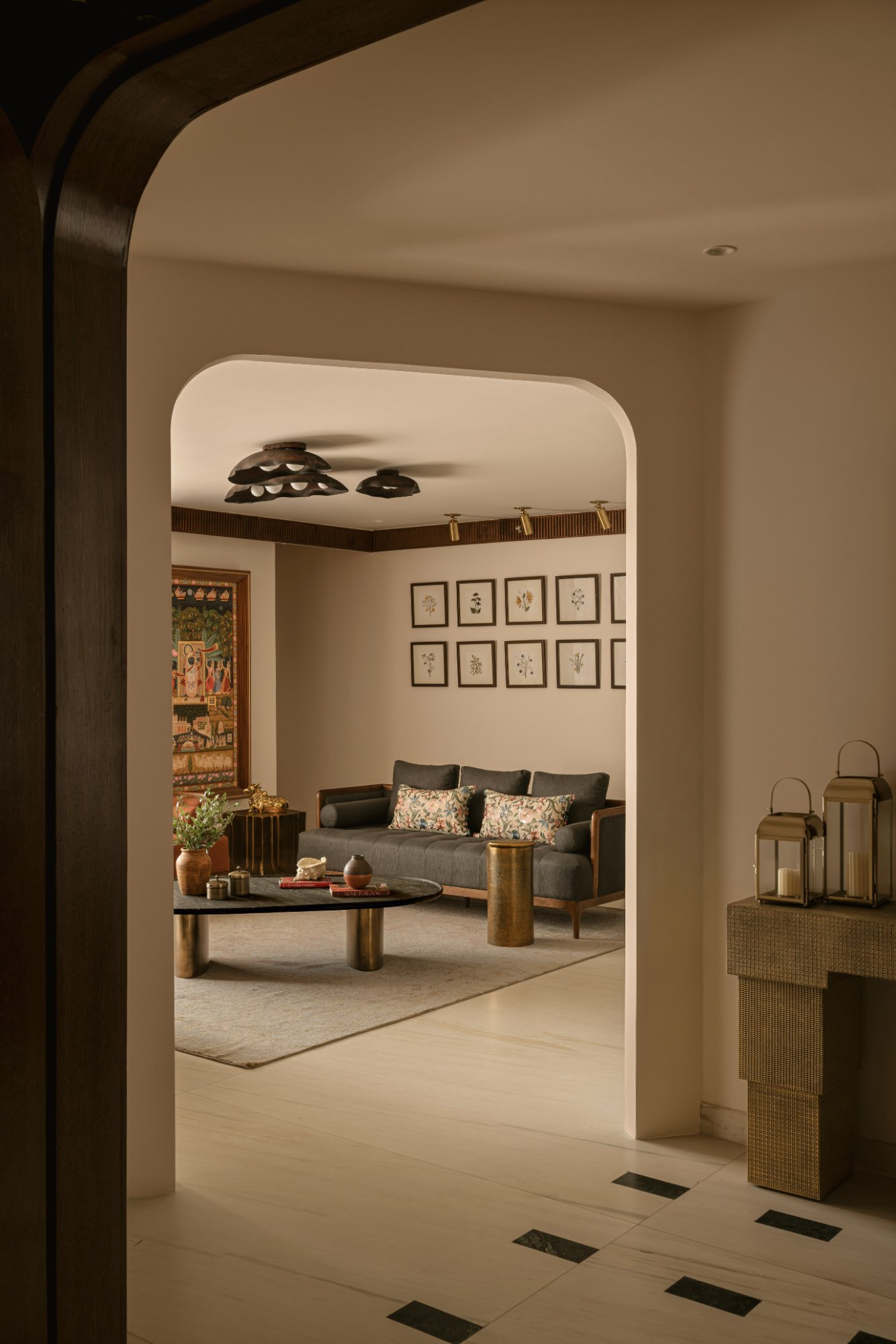
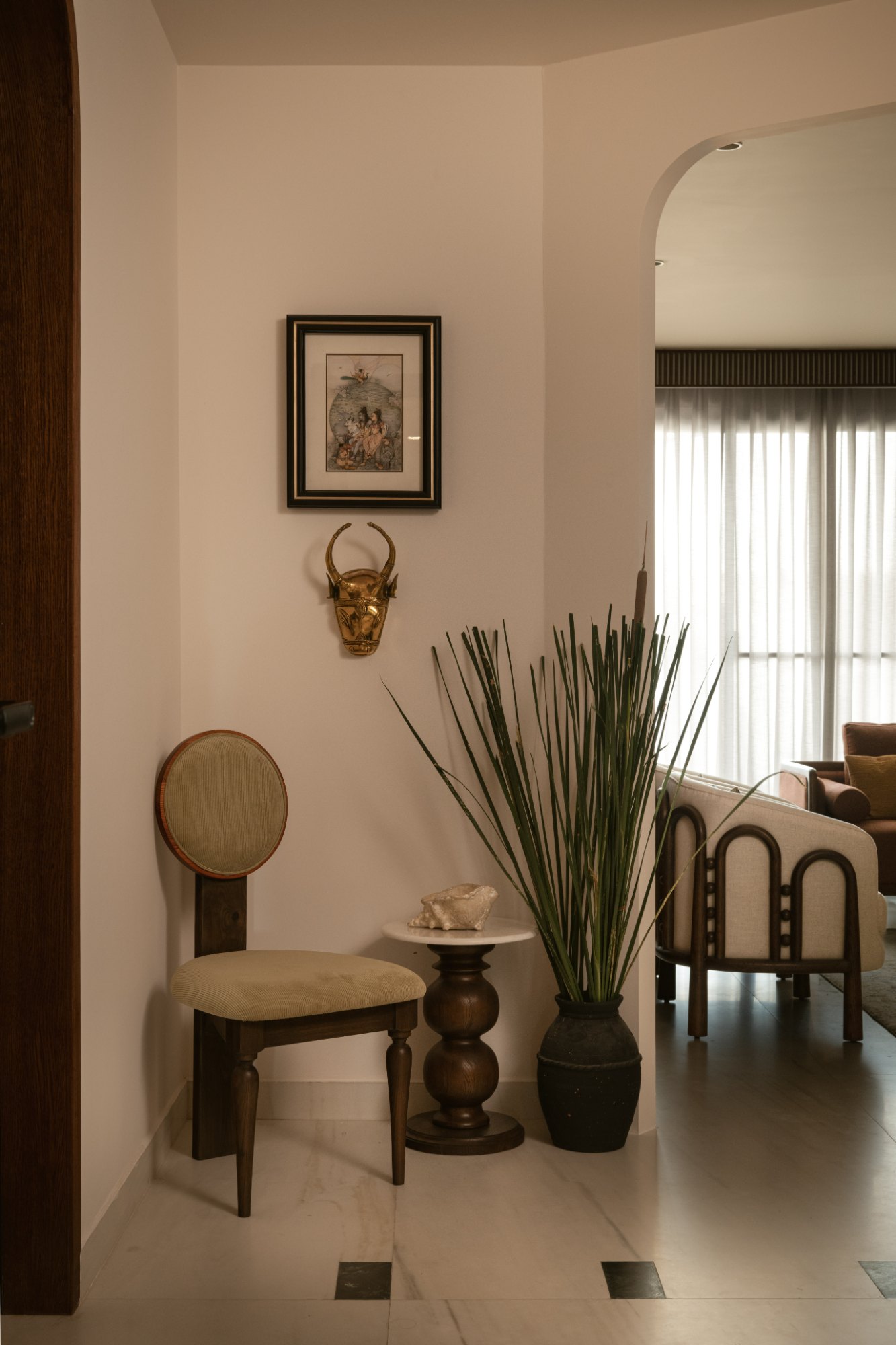
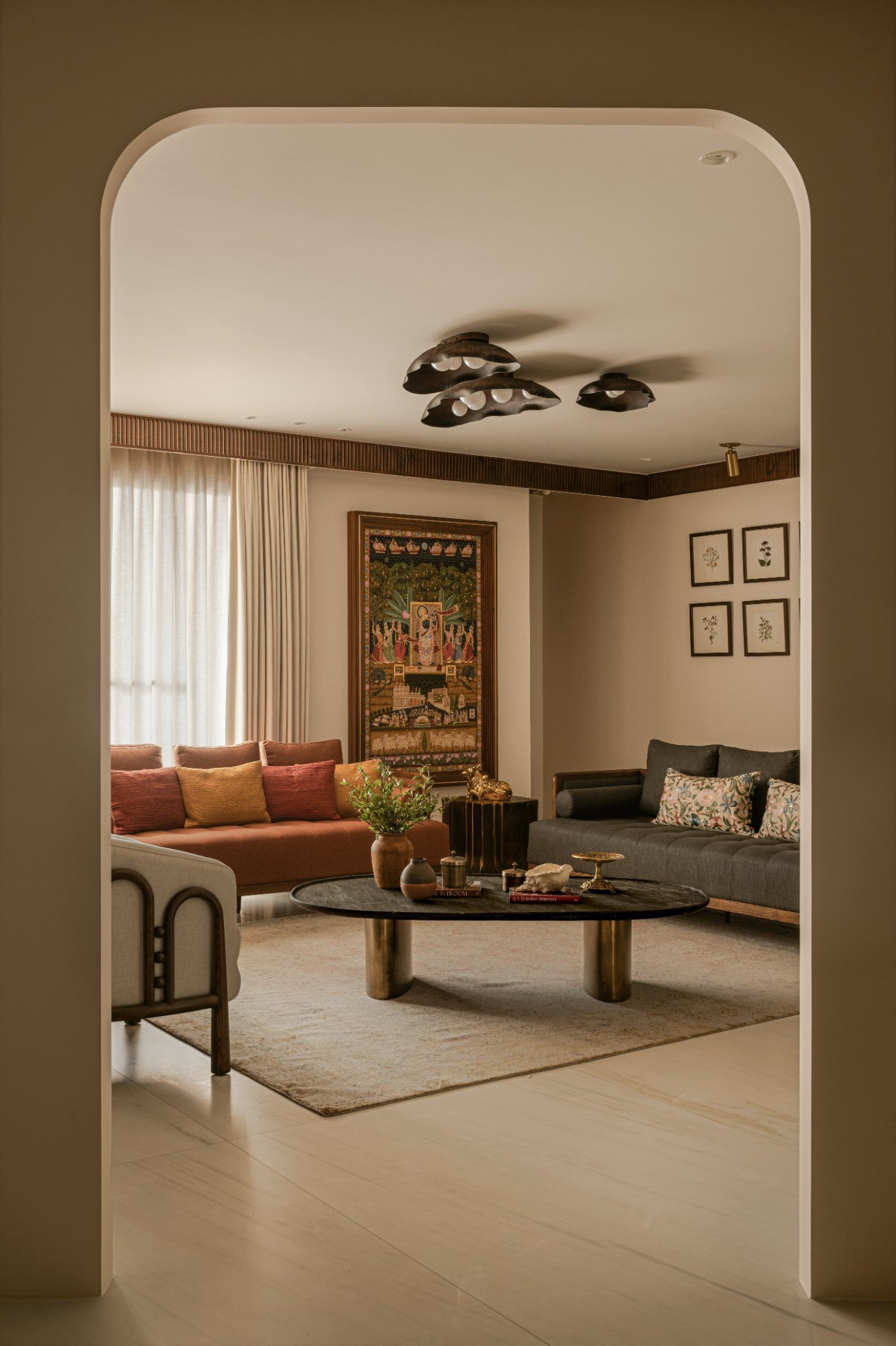
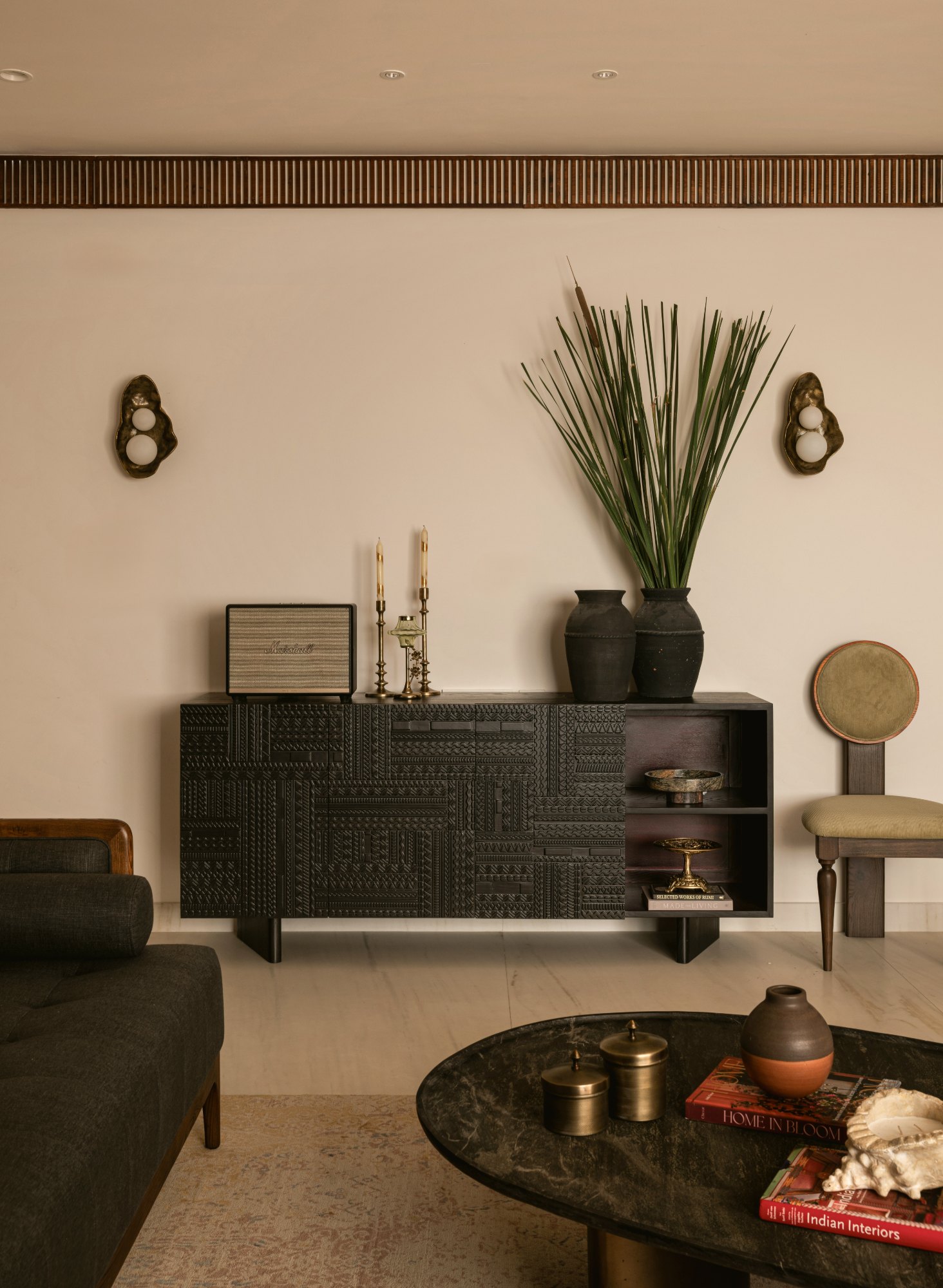
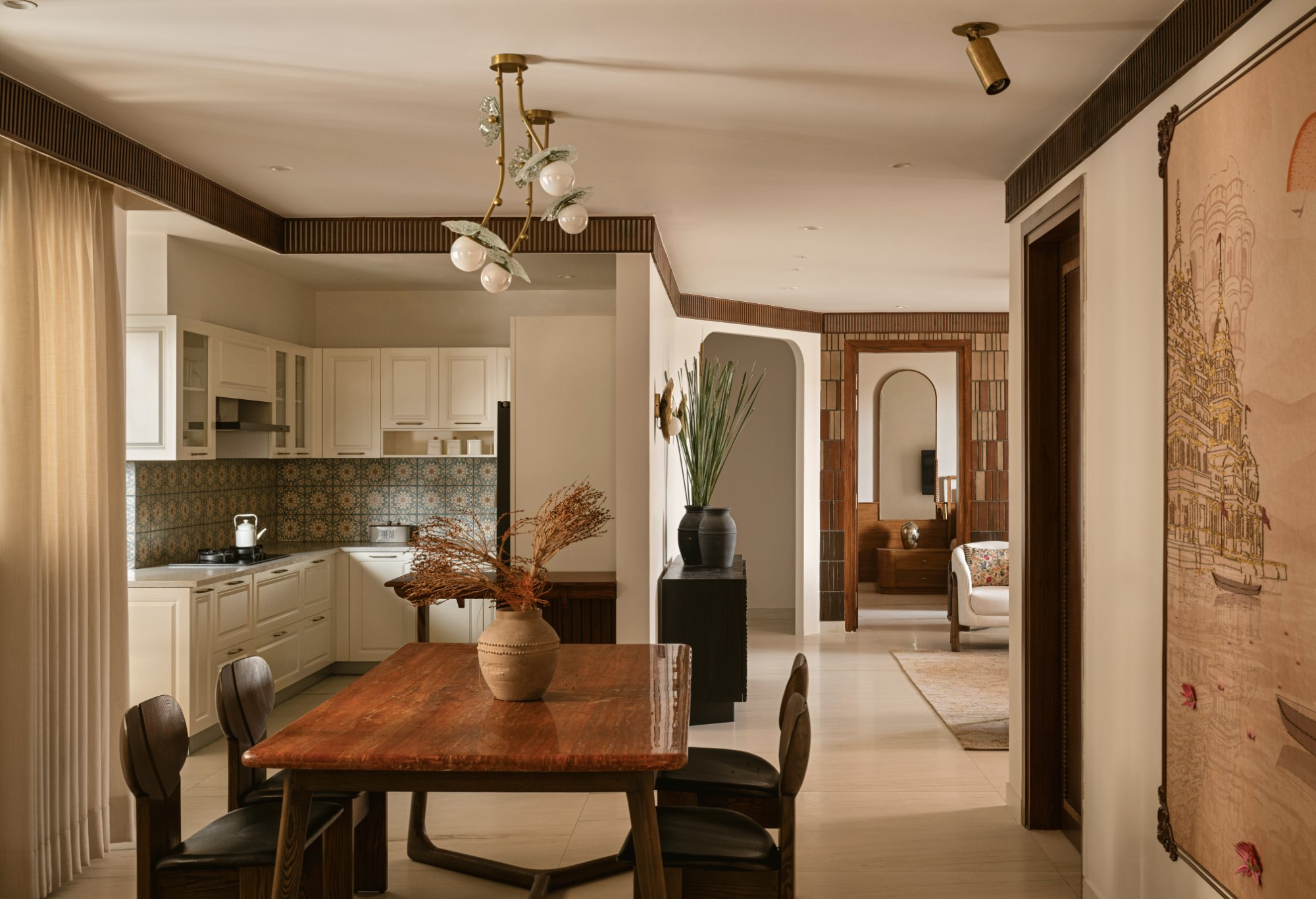
House of Grace begins at the threshold. A cane-textured console and a paisley-framed mirror set the tone, and the inlaid marble floor carries the eye through soft arched openings into the living room. The plan was opened where it needed generosity and closed where it needed intimacy, so the apartment reads as one continuous, unhurried sequence: foyer, living, dining, and then the quieter world of the bedrooms.
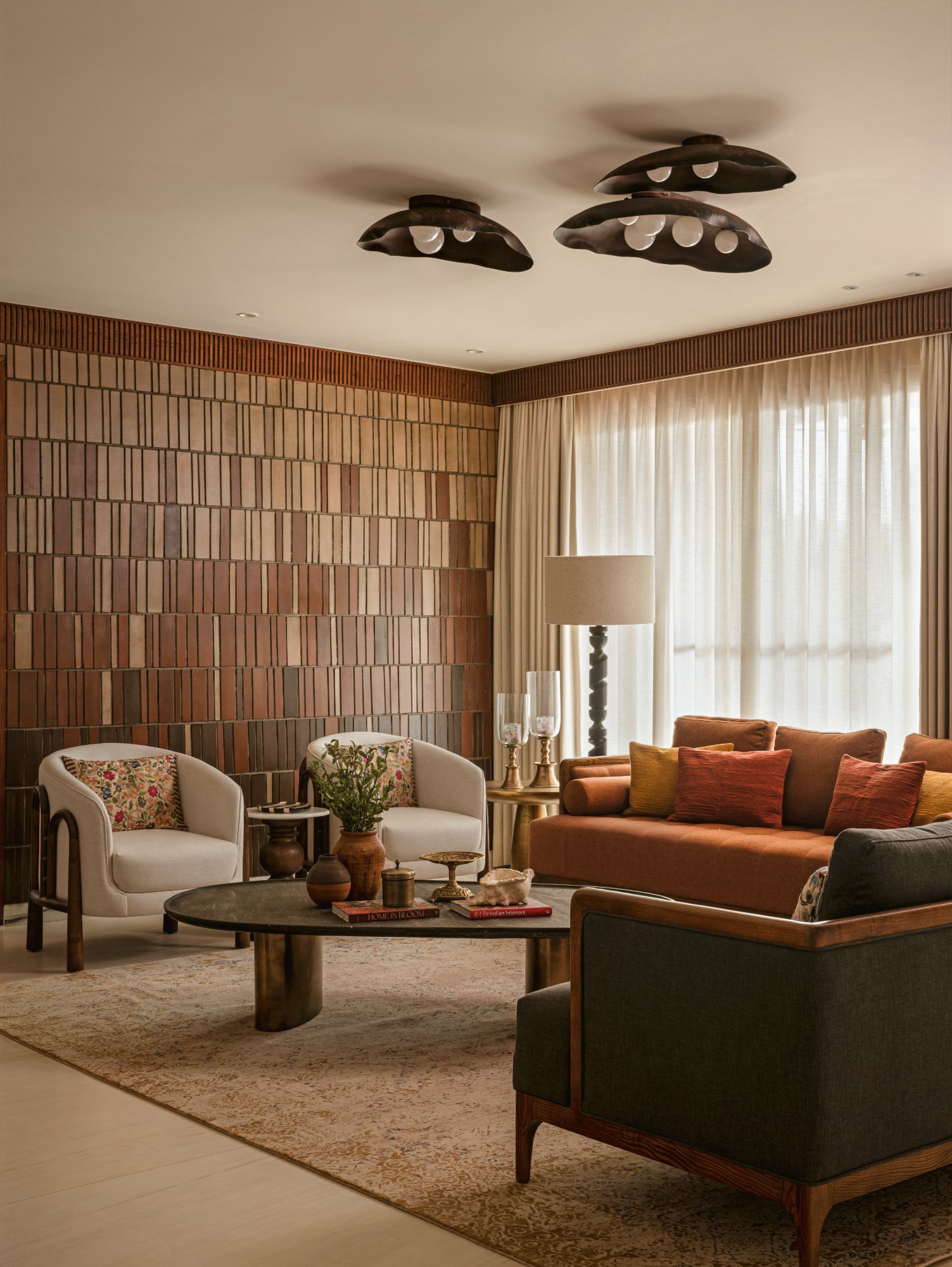
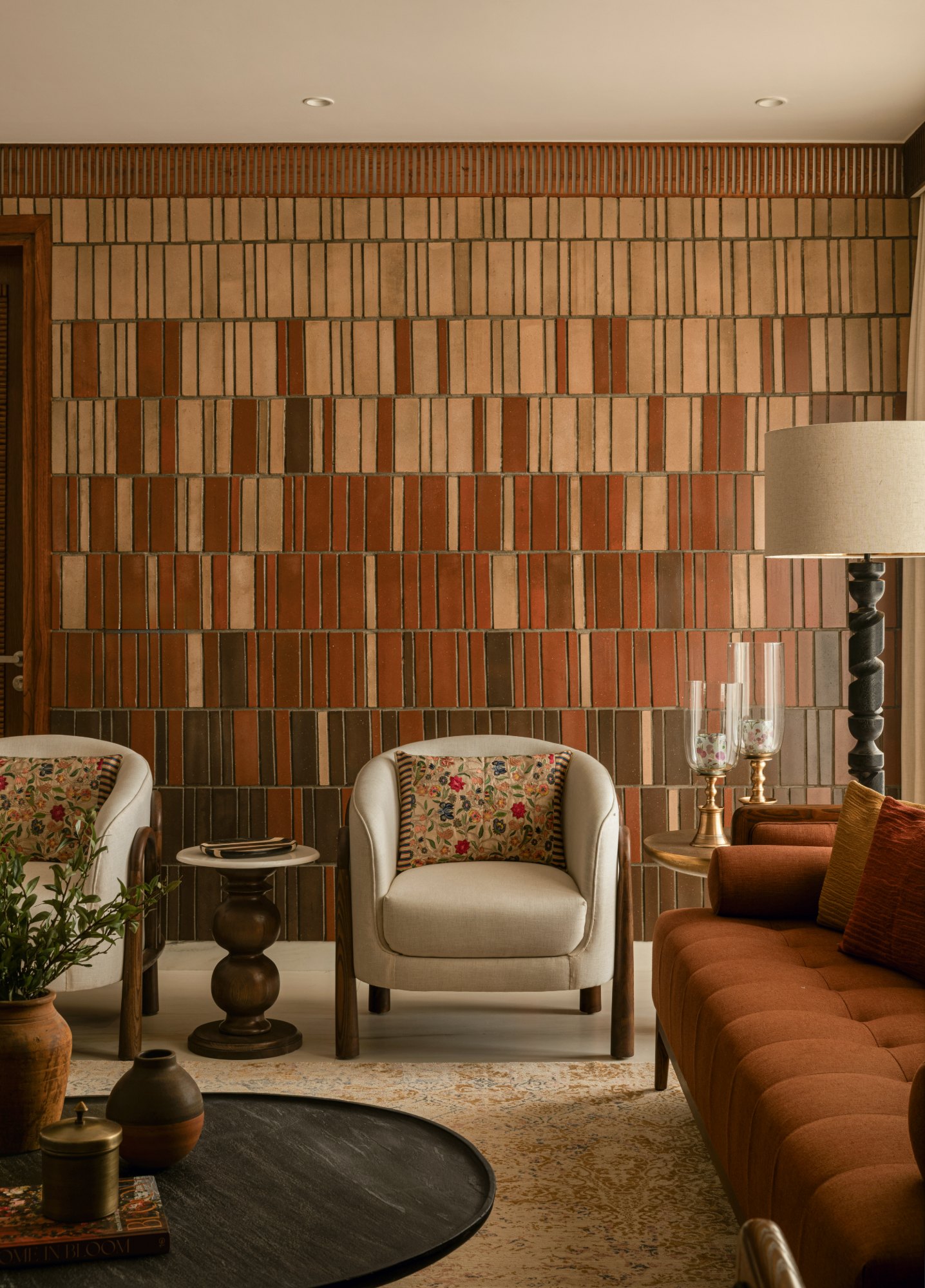
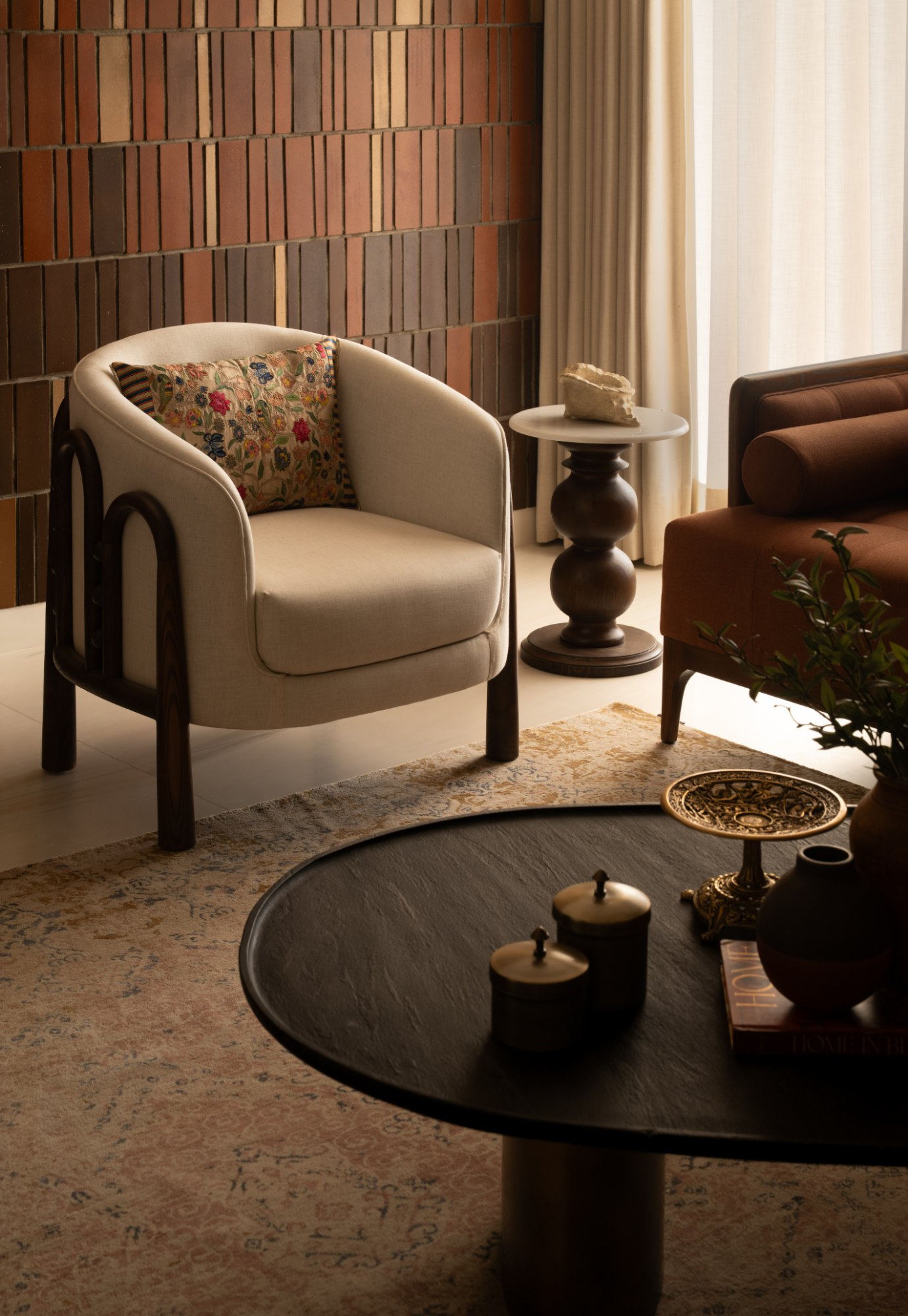
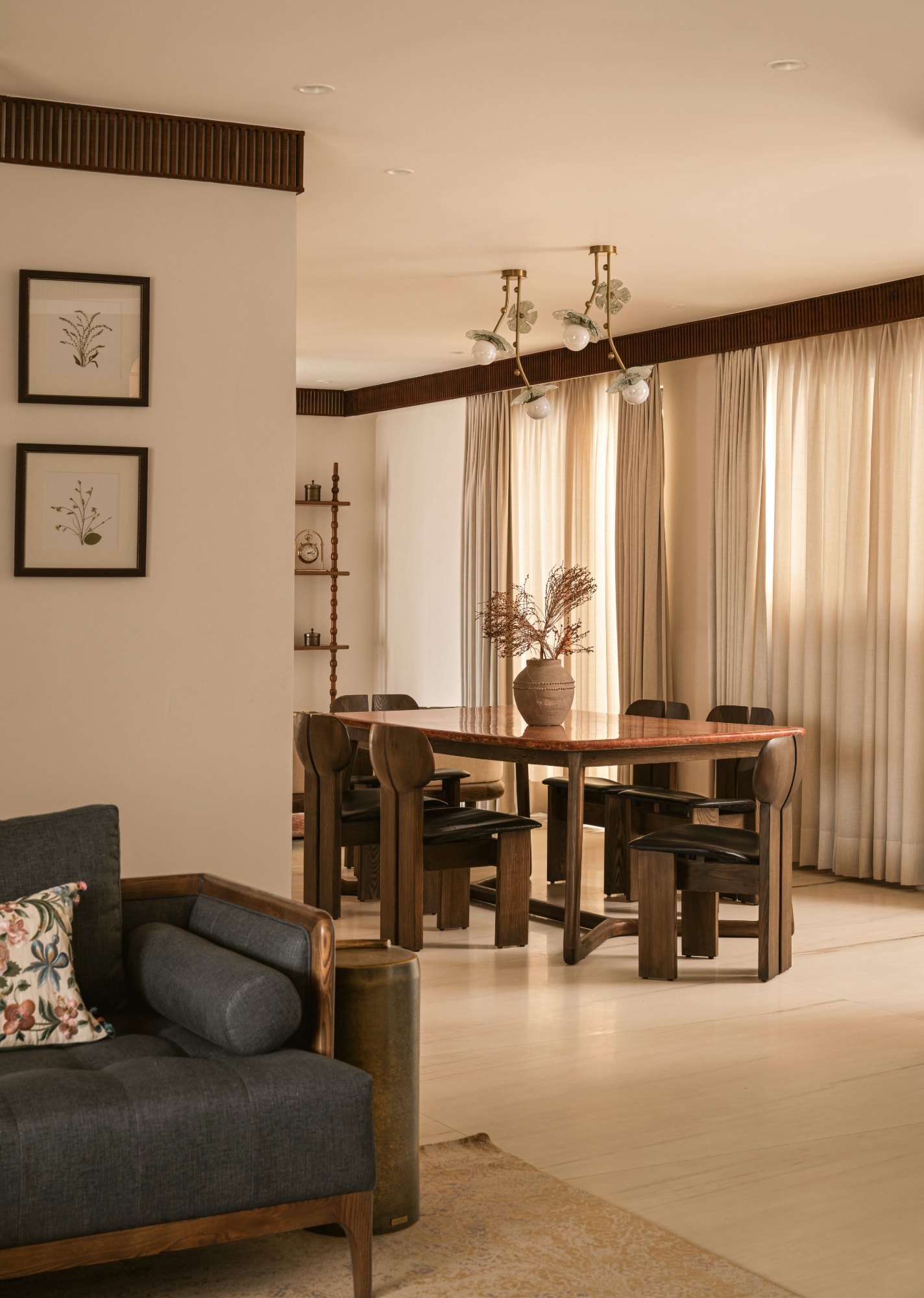
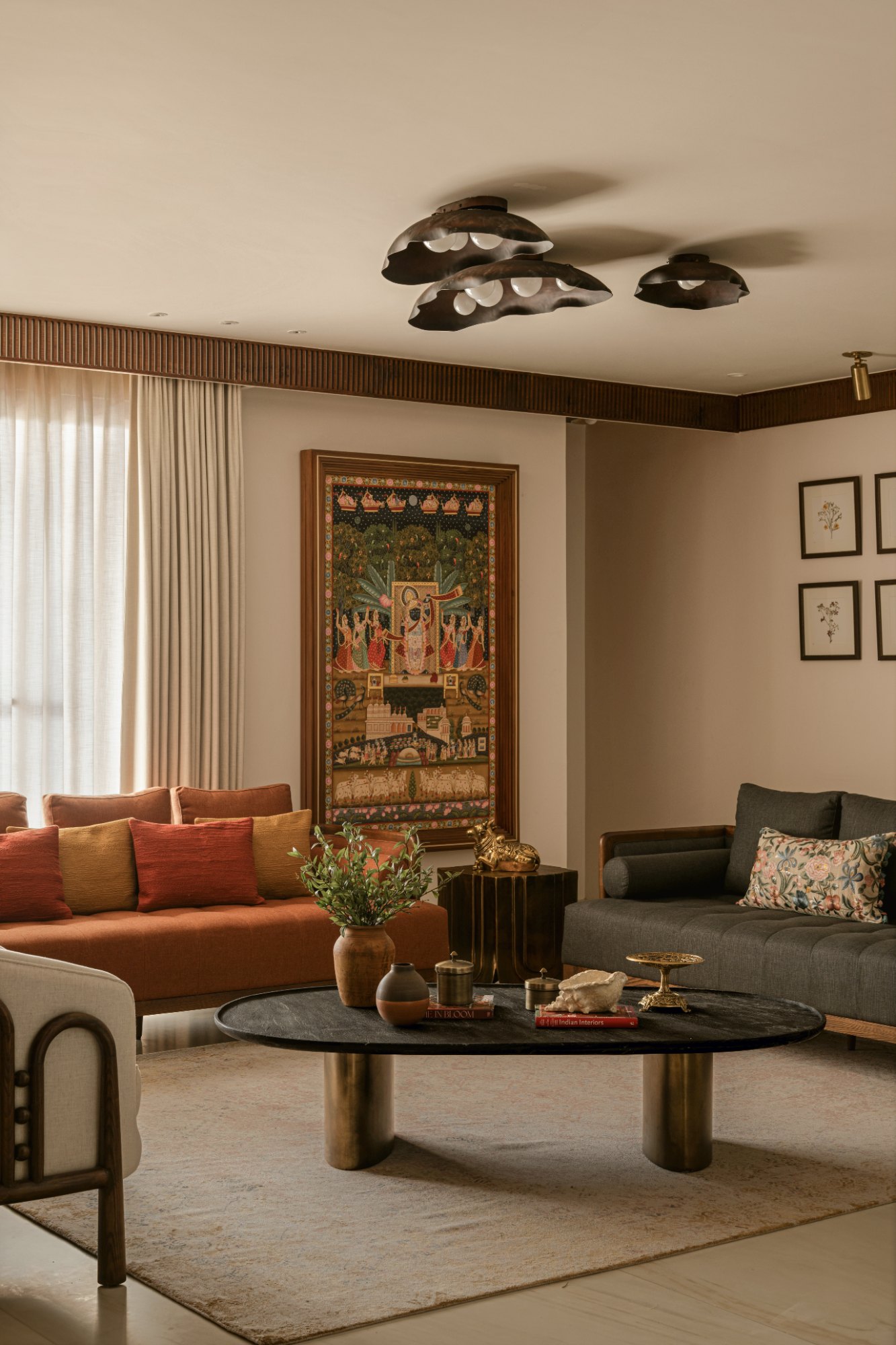
The living room is anchored by a wall of handmade terracotta tile, laid in shifting tones from clay to charcoal so the surface changes through the day. Against it sit terracotta and charcoal upholstery, cream armchairs in arched wooden frames, and a black stone table on brass drums. A monumental pichwai holds the far wall; a run of botanical prints answers it with restraint. Overhead, blackened metal ceiling lights sit like leaves.
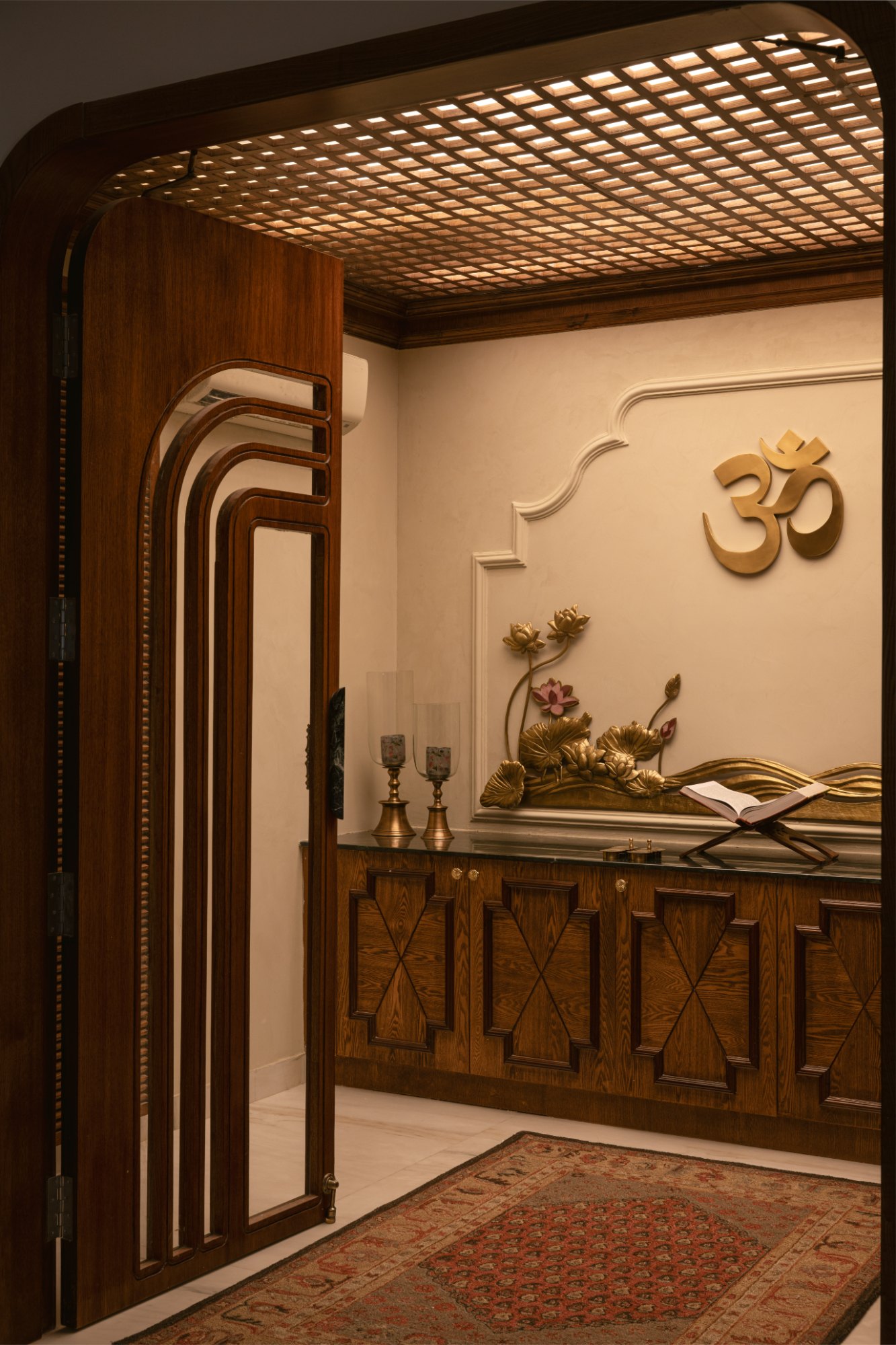
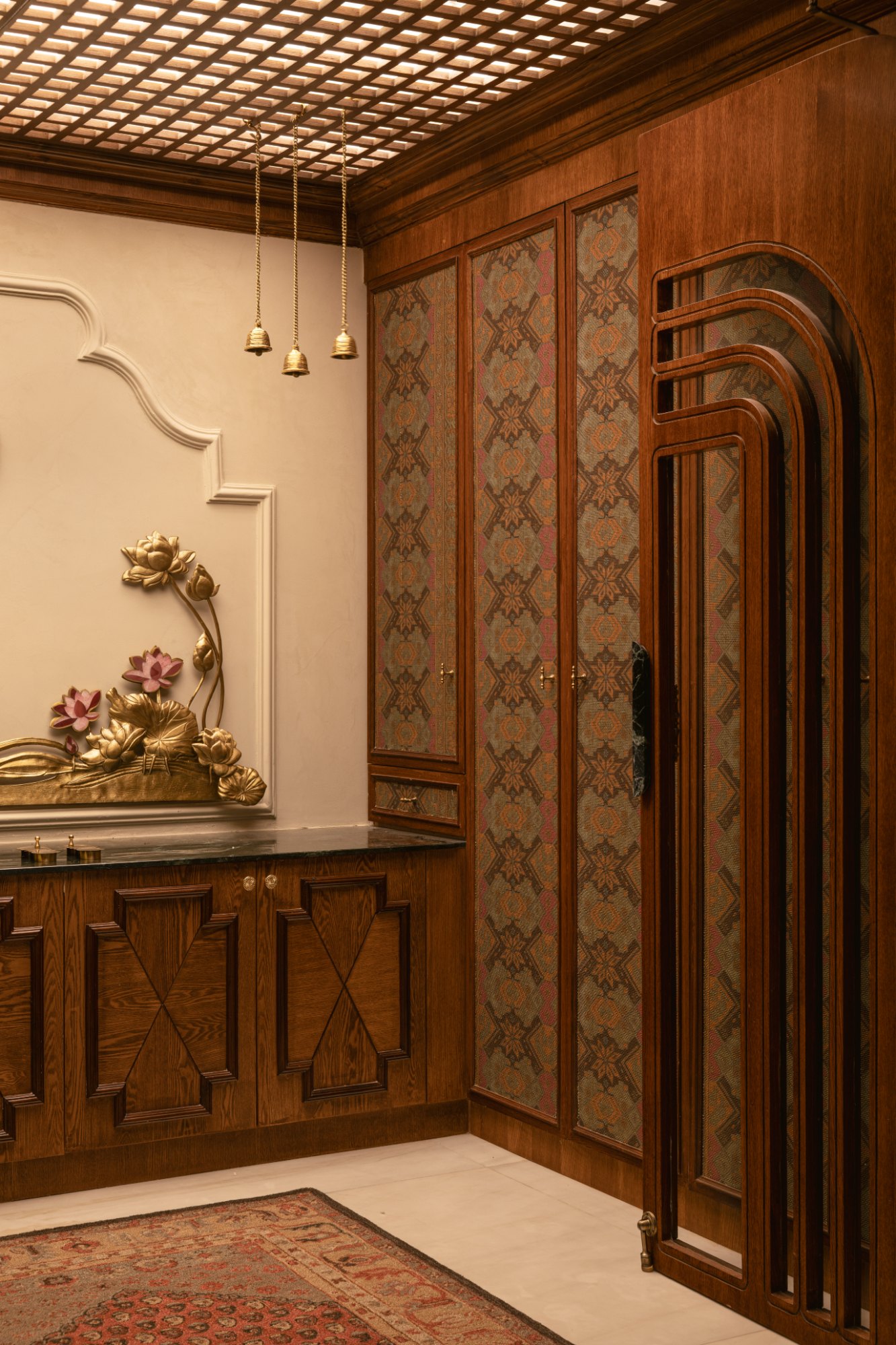
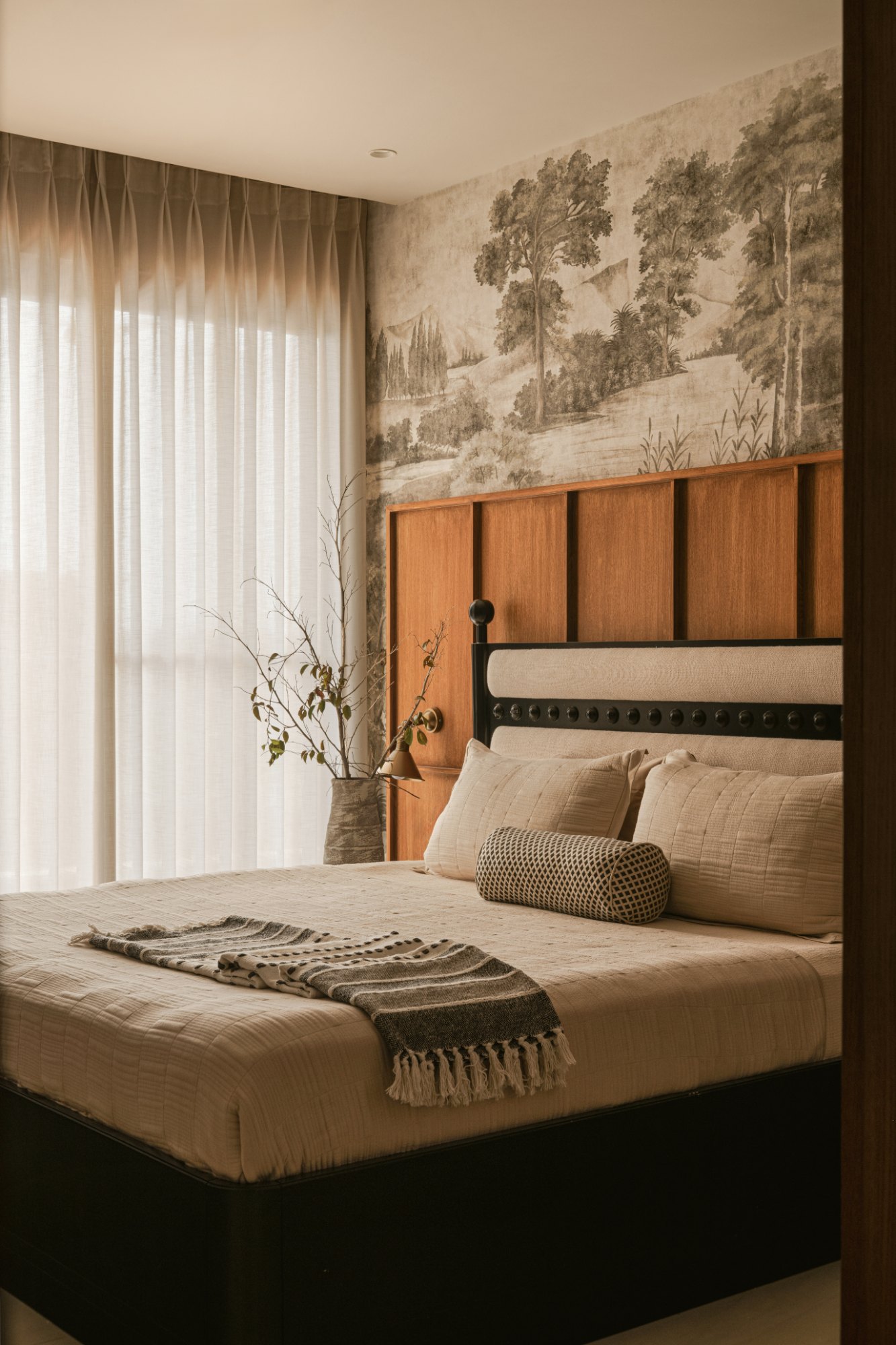
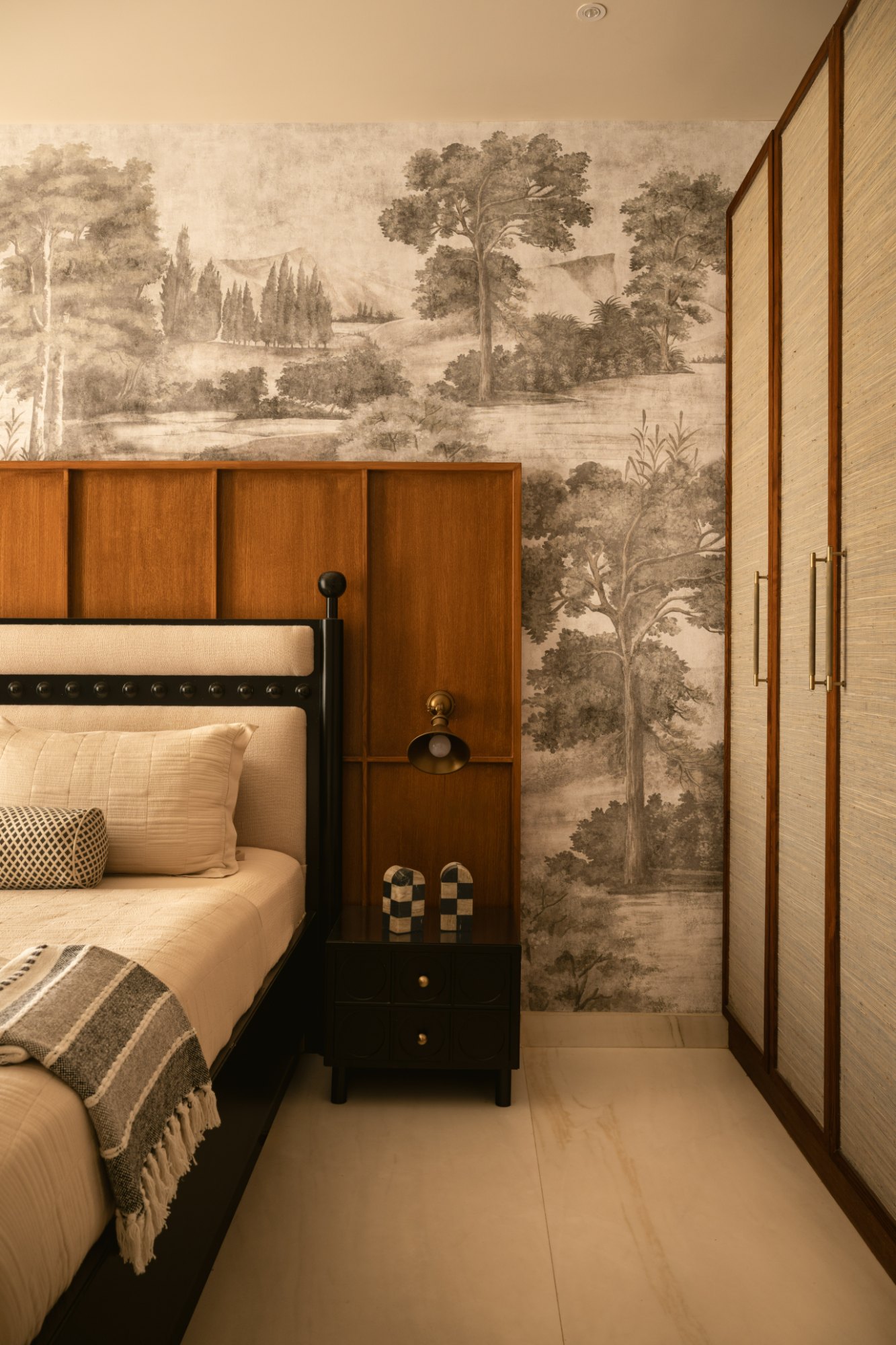
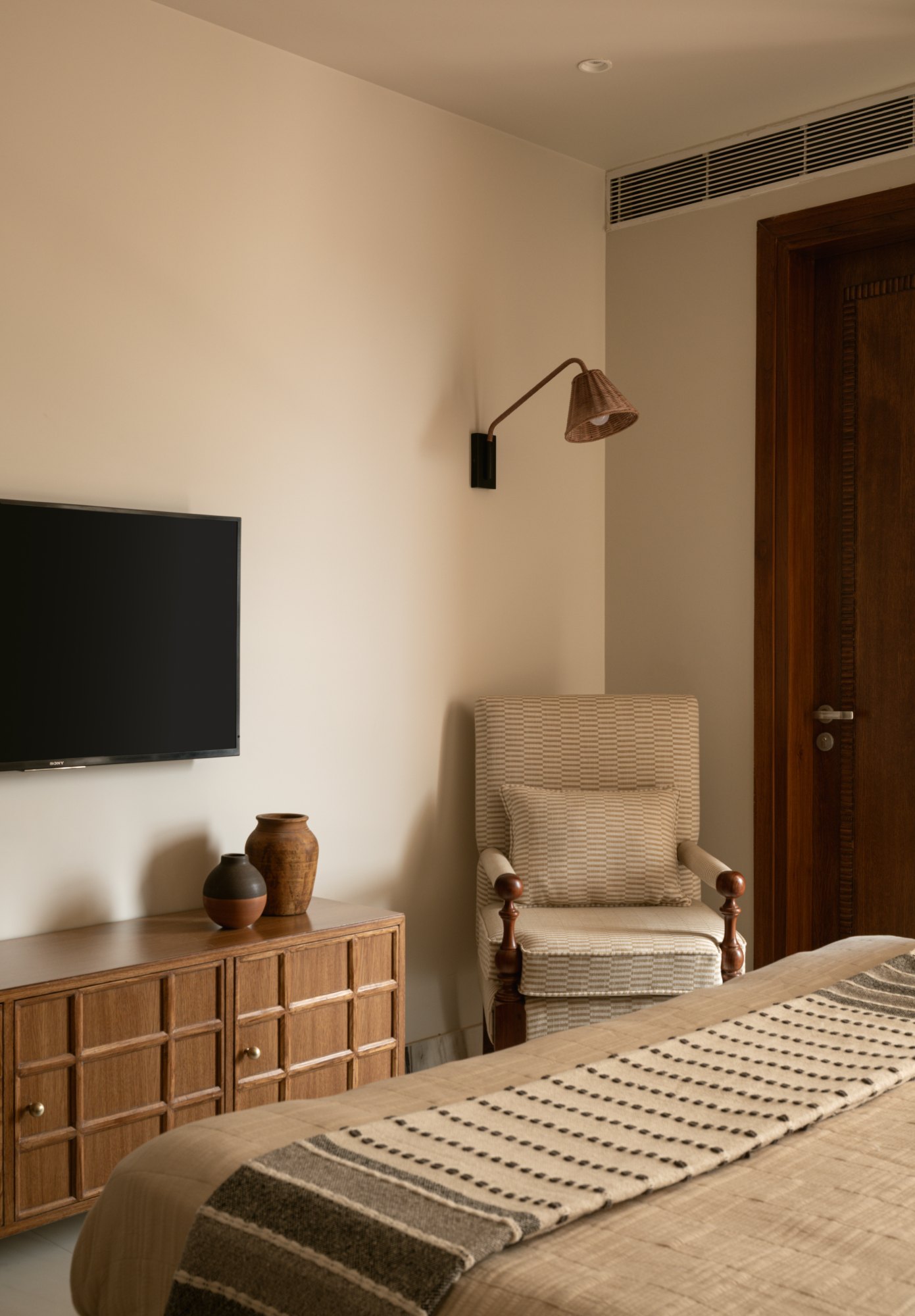
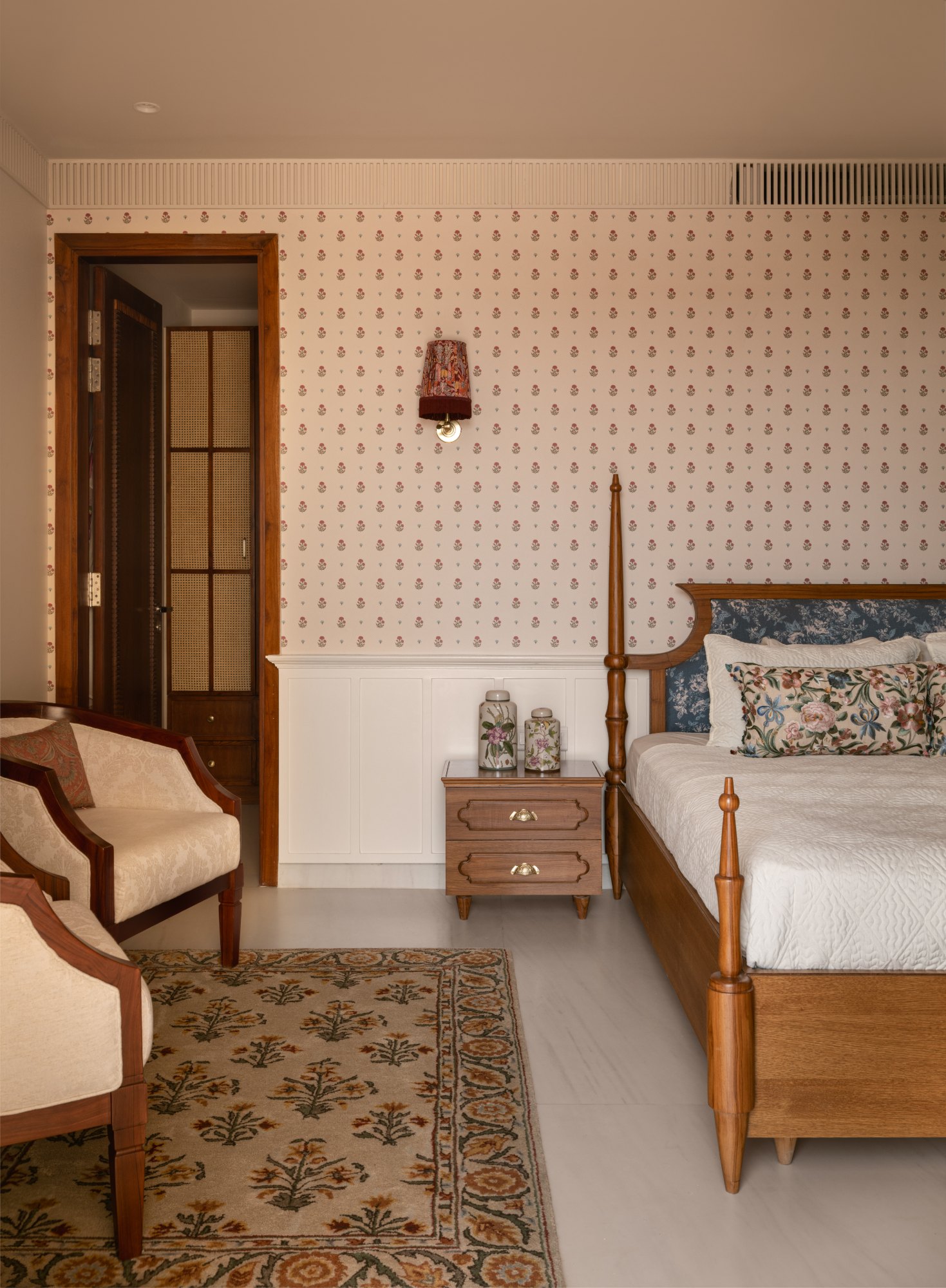
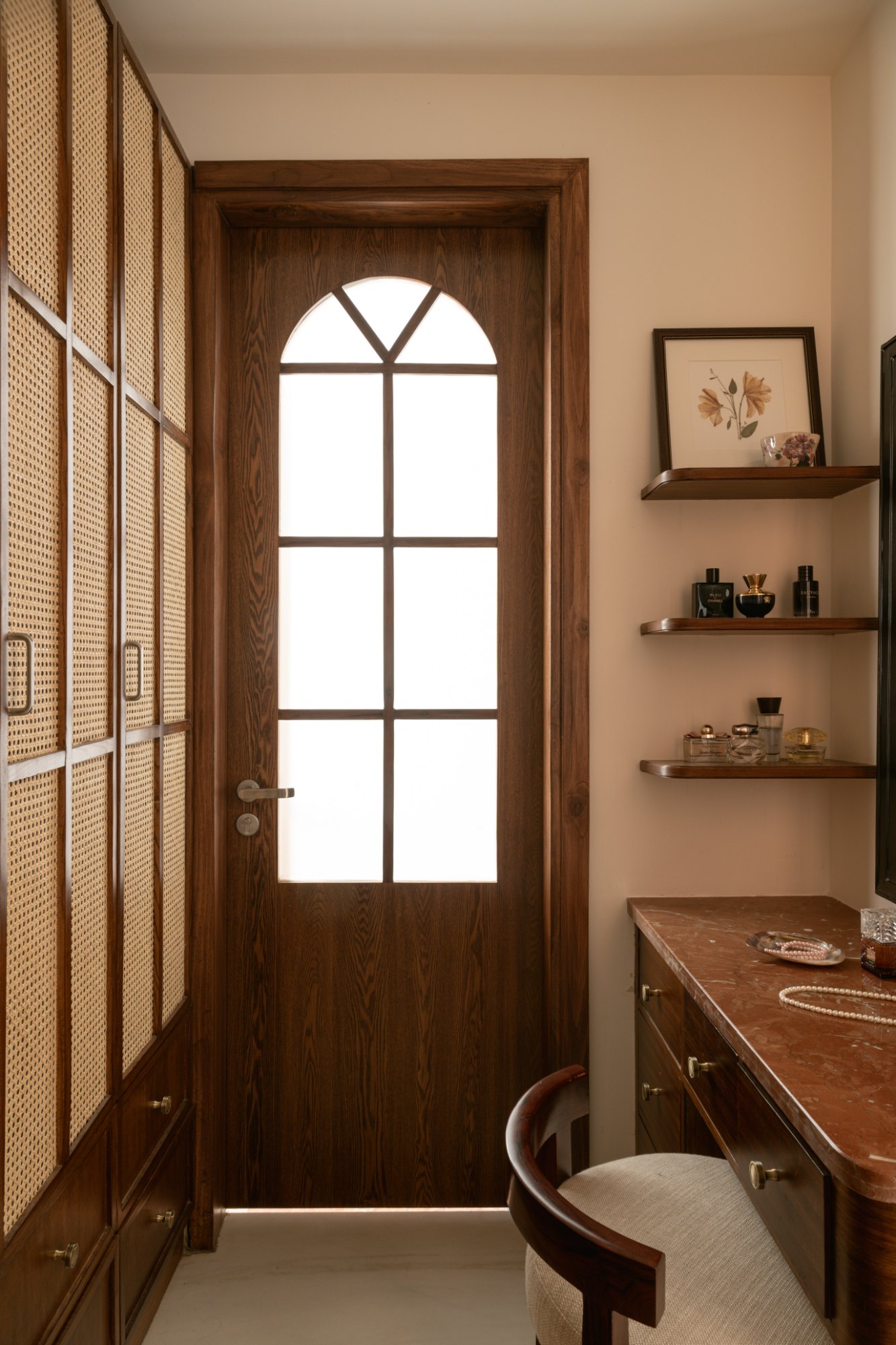
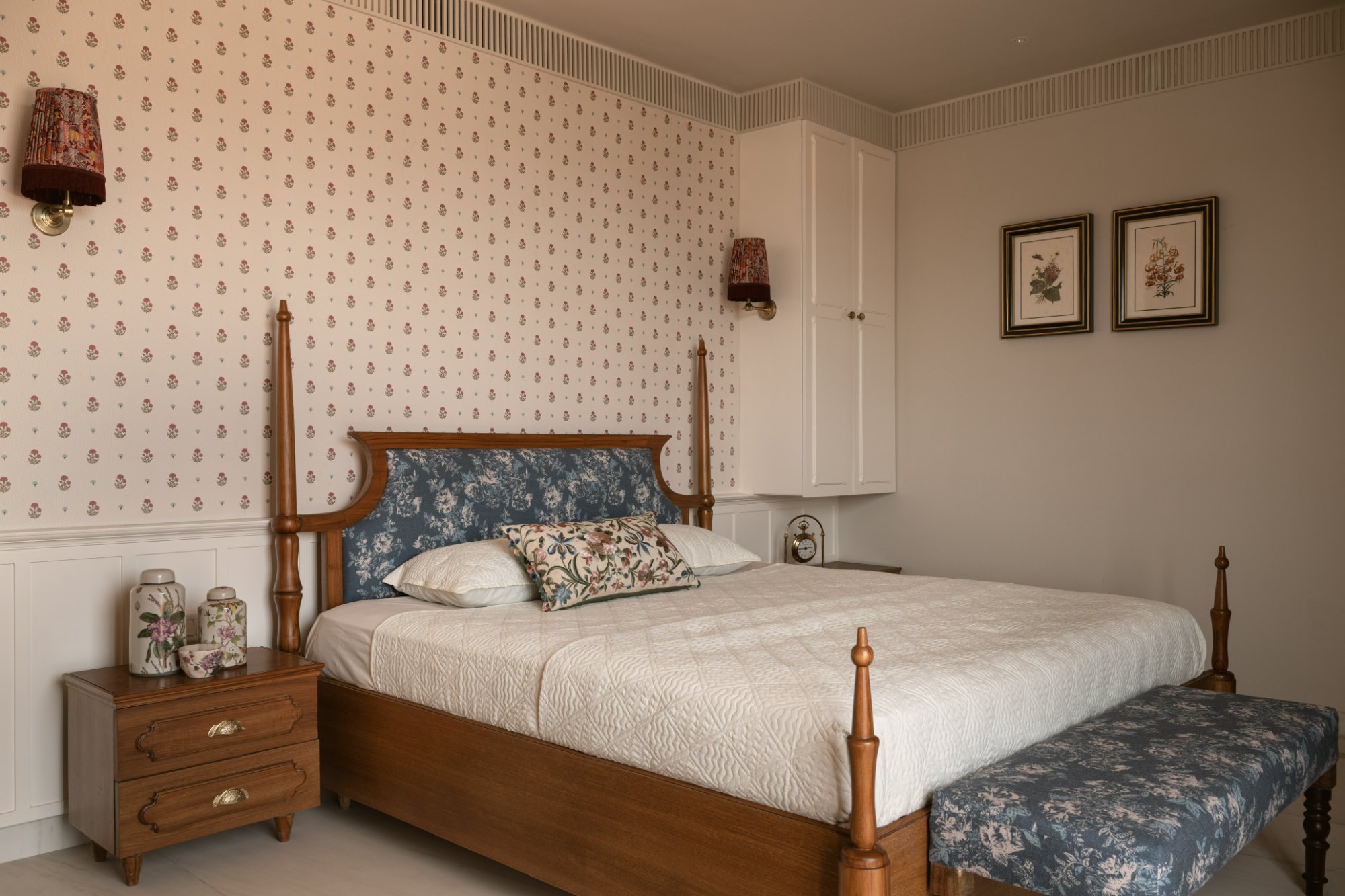
The pooja room is the most crafted moment in the home — a jaali ceiling washed with light, brocade-panelled joinery, a gilded lotus relief and hand-cast brass bells behind a layered arched door. In the bedrooms the register softens: a hand-painted landscape mural and grasscloth wardrobes in the primary suite, a block-print floral paper with white panelling and a four-poster in the guest room, and warm teak joinery in the third, each one finished with pieces made for the room it stands in.
Shuchita and Amit Chawla were incredibly warm clients — open to craft, patient with process, and generous with trust at every decision. Much of the character of this home comes from that ease; it is theirs as much as ours, and the name followed from the way it feels to walk through it.